Building on the article ZeroMQ part 1, you can create several servers (like an application cluster).
This time 3 server scripts are created; they can be on the same machine or on different machines. The only thing I changed in each script is the port it listens on for the service.
In the client, 3 sockets are created with the ports where the 3 servers listen.
The idea is for the client to send a message, and for the servers to receive it and send it back to the client.
The code of the client-side script is the following:
#!/usr/bin/env python

#importar zeromq
import zmq

#Se crea una instancia del contexto
context = zmq.Context()
#Se crea el socket con parametro peticion (REQ)
socket = context.socket(zmq.REQ)
#Se crean 3 sockets con la IP y los 3 puertos donde escucha
#los 3 servidores.
socket.connect("tcp://127.0.0.1:5000")
socket.connect("tcp://127.0.0.1:6000")
socket.connect("tcp://127.0.0.1:7000")
#Se crea un ciclo de 100 repeticiones
for i in range(100):
    #Se crea el string del mensaje
    mensaje = "mensaje %s" % i
    #Se envia el mensaje
    socket.send(mensaje)
    #Se muestra en pantalla el mensaje enviado
    print "Enviando", mensaje
    #Se recibe el mensaje de vuelta
    msg_in = socket.recv()
The server scripts are shown below: Server 1:
#!/usr/bin/env python

#Se importa zeroMQ
import zmq
#Se crea la instancia del contexto
context = zmq.Context()
#Se crea el socket pasandole como parametro respuesta (REP)
socket = context.socket(zmq.REP)
#Se asocia el socket a la IP y el puerto
socket.bind("tcp://127.0.0.1:5000")

#Se crea un ciclo
while True:
    #Se recibe el mensaje
    mensaje = socket.recv()
    #Se muestra en pantalla el mensaje recibido
    print "Recibiendo", mensaje
    #Se envia el mensaje de regreso al cliente
    socket.send(mensaje)
Server 2:
#!/usr/bin/env python

#Se importa zeroMQ
import zmq
#Se crea la instancia del contexto
context = zmq.Context()
#Se crea el socket pasandole como parametro respuesta (REP)
socket = context.socket(zmq.REP)
#Se asocia el socket a la IP y el puerto
socket.bind("tcp://127.0.0.1:6000")

#Se crea un ciclo
while True:
    #Se recibe el mensaje
    mensaje = socket.recv()
    #Se muestra en pantalla el mensaje recibido
    print "Recibiendo", mensaje
    #Se envia el mensaje de regreso al cliente
    socket.send(mensaje)
Server 3:
#!/usr/bin/env python

#Se importa zeroMQ
import zmq
#Se crea la instancia del contexto
context = zmq.Context()
#Se crea el socket pasandole como parametro respuesta (REP)
socket = context.socket(zmq.REP)
#Se asocia el socket a la IP y el puerto
socket.bind("tcp://127.0.0.1:7000")

#Se crea un ciclo
while True:
    #Se recibe el mensaje
    mensaje = socket.recv()
    #Se muestra en pantalla el mensaje recibido
    print "Recibiendo", mensaje
    #Se envia el mensaje de regreso al cliente
    socket.send(mensaje)
Next, start the 3 servers and then the client: The following figure shows the messages sent by the client:
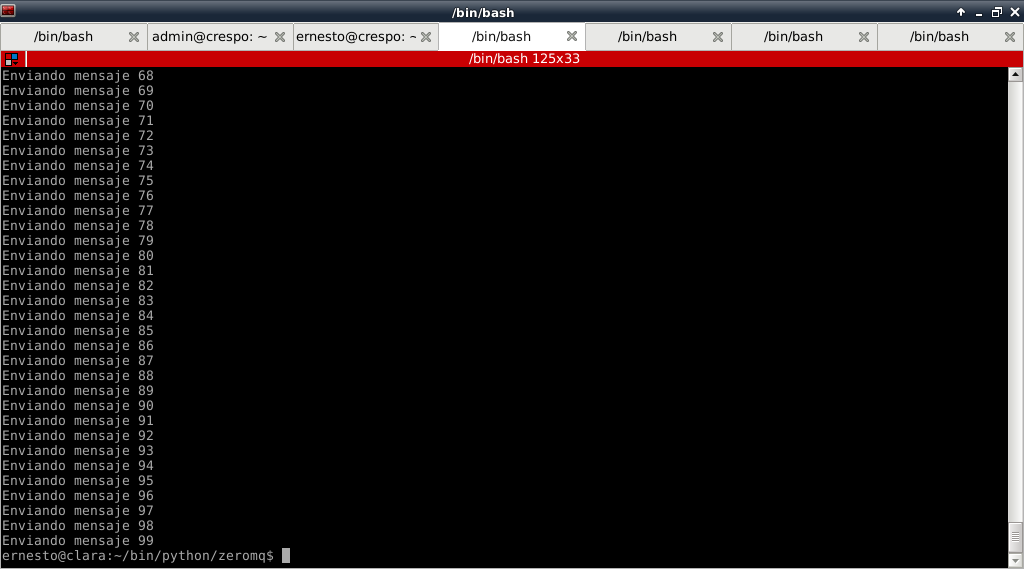
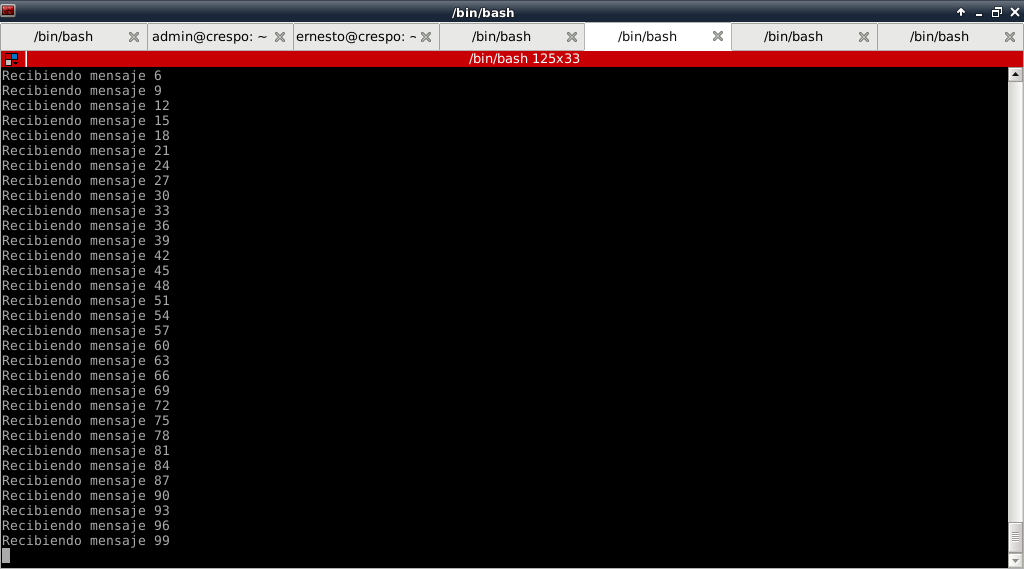
The figures of the 3 servers are shown below:
Server 1:
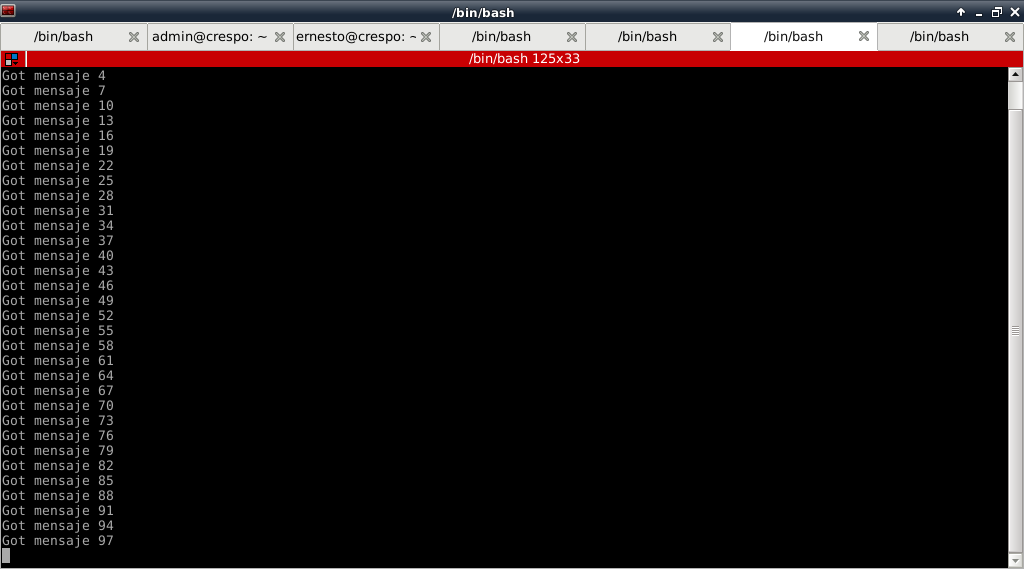
Server 2:
Server 3:
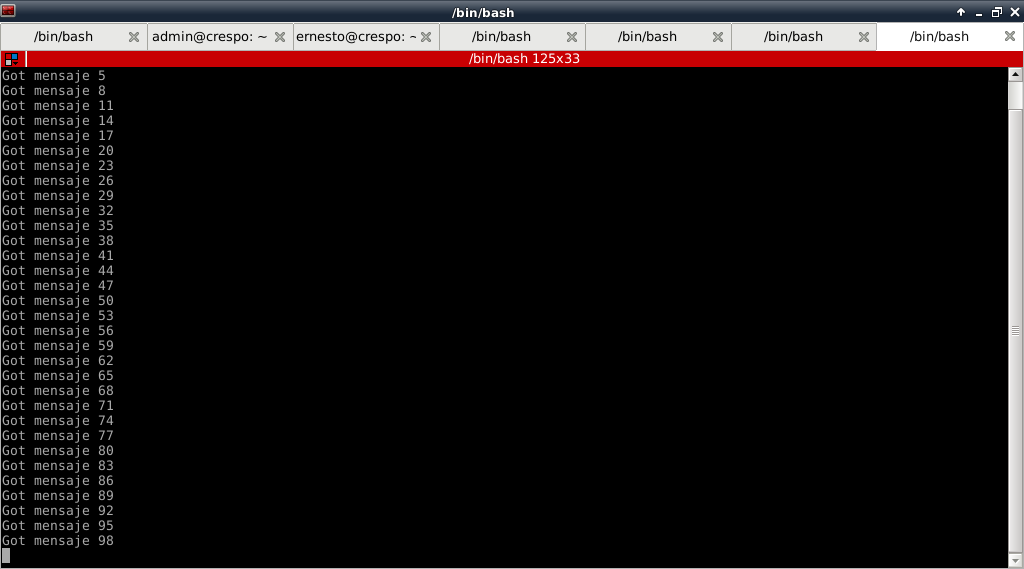
Looking at the 3 server figures, you can see how the reception of messages is distributed evenly.
This scheme could later be made somewhat more complex by adding a queue between the clients and the servers.
Make a donation! If you liked the article you can make a donation with Bitcoin (BTC) using the digital wallet of your choice to the following address: 17MtNybhdkA9GV3UNS6BTwPcuhjXoPrSzV
Or by scanning the QR code from your wallet:
