In December an article was published explaining how to solve systems of equations.
This article is based on the English article QR descomposition with numpy .
If you want to find out more about QR decomposition you can check the wikipedia page or the following page.
The equations used are:
3x+9y-10z  =   24
x-6y+4z      =   -4
10x-2y+8z  =  20
Where Ax = b.
A = [[3 9 -10][1 -6 4][10 -2 8]] y
B  = [[24][-4[[20]]
The code is shown below:
#!/usr/bin/env python

# -*- coding: utf-8 -*-

from numpy import *


#Se define los valores de la matriz A
A = array([[3,9,-10],[1,-6,4],[10,-2,8]])

Q,R = linalg.qr(A) # qr decomposition of A

#Se definen los valores de la matriz B
b = array([[24],[-4],[20]])


#resolver Ax=b usando la funcion estandar numpy
x = linalg.solve(A,b)


#resolver Ax = b usando Q y R.
y = dot(Q.T,b)
xQR = linalg.solve(R,y)

print "\nComparacion de Soluciones:"
print x.T,'Ax=b'
print xQR.T,'Rx=y'
When you run the script you get the following:
python qr.py Comparison of Solutions:
[[ 2.99029126  0.40776699 -1.13592233]] Ax=b

[[ 2.99029126  0.40776699 -1.13592233]] Rx=y
As you can see, the solution using the standard numpy function and the one using QR decomposition produce the same result.
Make a donation! If you liked the article you can make a donation in Bitcoin (BTC) using the digital wallet of your choice to the following address: 17MtNybhdkA9GV3UNS6BTwPcuhjXoPrSzV
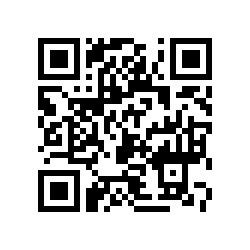
Or by scanning the QR code from your wallet: